对象需要分类吗?
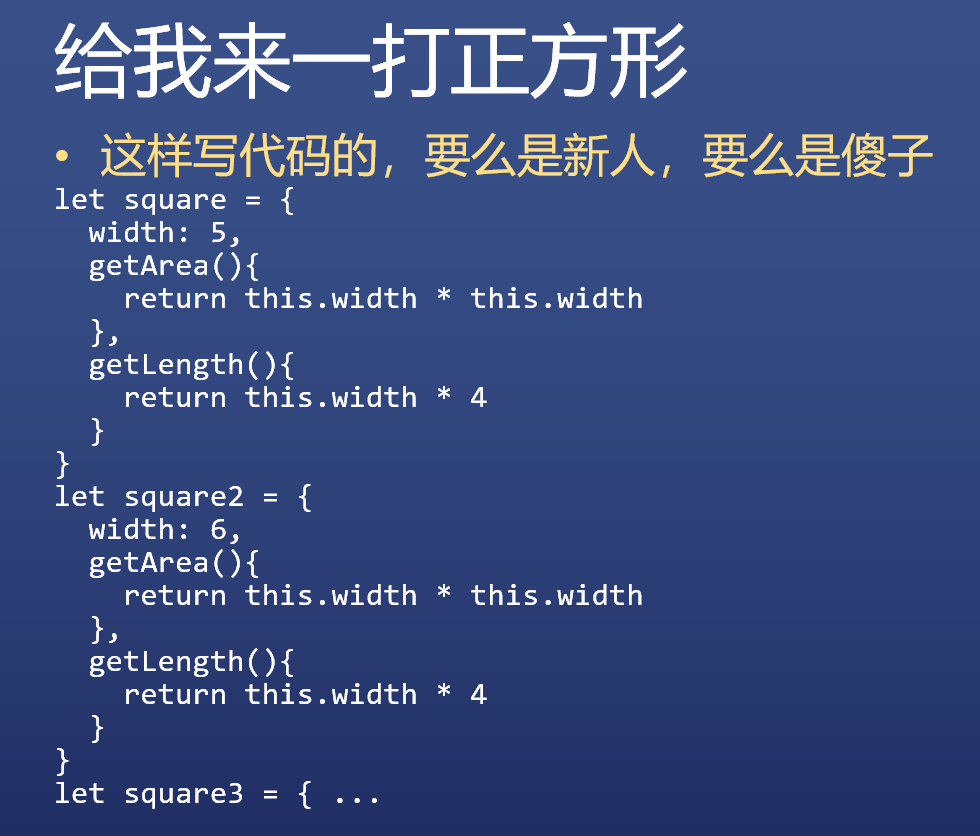
输出各种图形的面积和周长
代码
1
2
3
4
5
6
7
8
9
| let square = {
width: 5,
getArea(){
return this.width * this.width
},
getLength(){
return this.width * 4
}
}
|
1
2
3
4
5
6
7
8
9
10
11
12
13
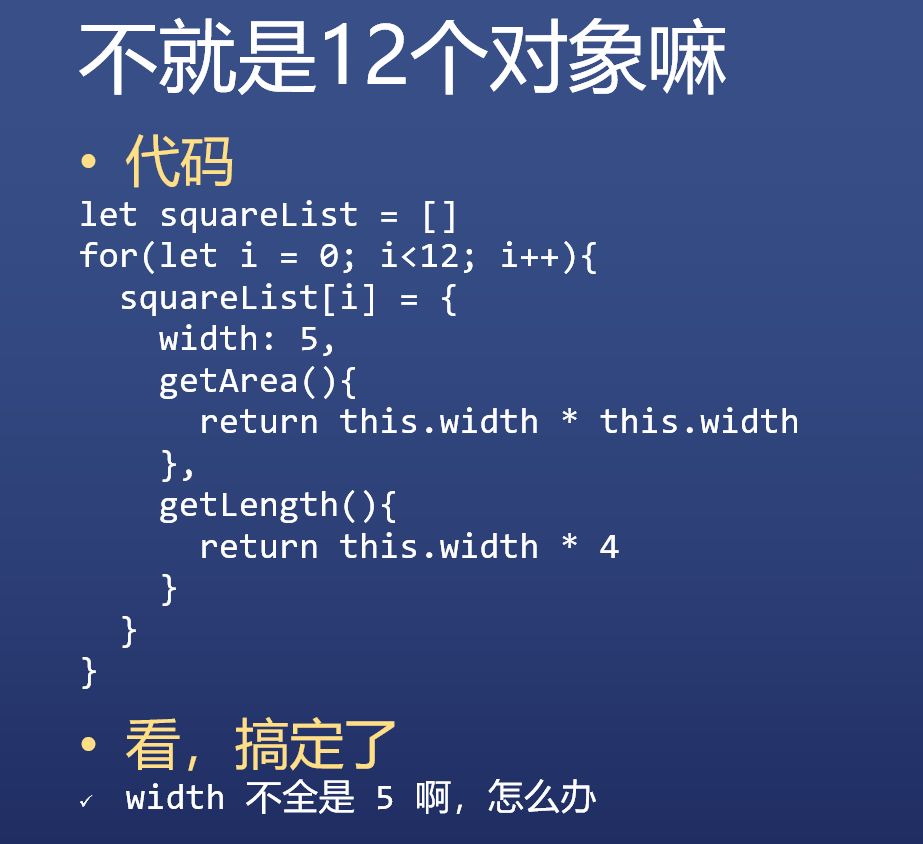
| let squareList = []
let widthList = [5,6,5,6,5,6,5,6,5,6,5,6]
for(let i = 0; i<12; i++){
squareList[i] = {
width: widthList[i],
getArea(){
return this.width * this.width
},
getLength(){
return this.width * 4
}
}
}
|
看,又搞定了
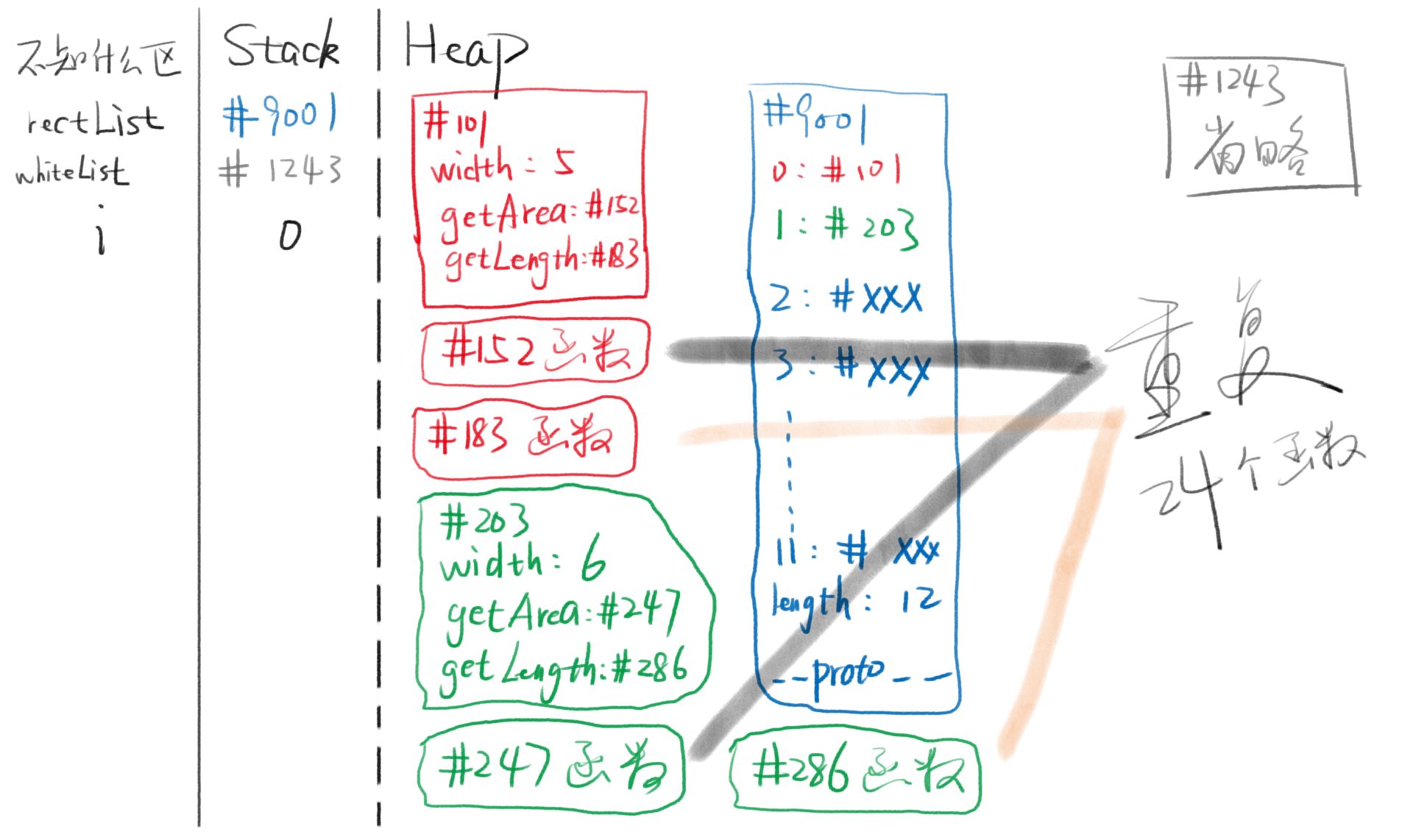
内存图:重复的函数
1
2
3
4
5
6
7
8
9
10
11
12
13
14
15
16
|
代码
let squareList = []
let widthList = [5,6,5,6,5,6,5,6,5,6,5,6]
let squarePrototype = {
  getArea(){
    return this.width * this.width
  },
  getLength(){
    return this.width * 4
  }
}
for(let i = 0; i<12; i++){
  squareList[i] = Object.create(squarePrototype)
  squareList[i].width = widthList[i]
}
|
看,双搞定了
- 还是垃圾代码!你创建
square 的代码太分散了!
把代码抽离到一个函数里,然后调用函数
1
2
3
4
5
6
7
8
9
10
11
12
13
14
15
16
17
18
19
20
21
| let squareList = []
let widthList = [5,6,5,6,5,6,5,6,5,6,5,6]
function createSquare(width){
let obj = Object.create(squarePrototype)
obj.width = width
return obj
}
let squarePrototype = {
getArea(){
return this.width * this.width
},
getLength(){
return this.width * 4
}
}
for(let i = 0; i<12; i++){
squareList[i] = createSquare(widthList[i])
}
|
squarePrototype 原型 和 createSquare 函数 还是分散的
1
2
3
4
5
6
7
8
9
10
11
12
13
14
15
16
17
18
19
20
21
22
23
| let squareList = []
let widthList = [5,6,5,6,5,6,5,6,5,6,5,6]
function createSquare(width){
let obj = Object.create(createSquare.squarePrototype)
obj.width = width
return obj
}
createSquare.squarePrototype = {
getArea(){
return this.width * this.width
},
getLength(){
return this.width * 4
},
constructor: createSquare
}
for(let i = 0; i<12; i++){
squareList[i] = createSquare(widthList[i])
console.log(squareList[i].constructor)
}
|
这段代码几乎完美
new 操作符
1
2
3
4
5
6
7
8
9
10
11
12
13
14
15
16
17
18
19
20
| let squareList = []
let widthList = [5,6,5,6,5,6,5,6,5,6,5,6]
function Square(width){
this.width = width
}
Square.prototype.getArea = function(){
return this.width * this.width
}
Square.prototype.getLength = function(){
return this.width * 4
}
for(let i = 0; i<12; i++){
squareList[i] = new Square(widthList[i])
console.log(squareList[i].constructor)
}
|
1
2
3
4
5
6
7
8
9
10
11
12
13
14
15
| function createSquare(width){
let obj = Object.create(createSquare.squarePrototype)
obj.width = width
return obj
}
createSquare.squarePrototype = {
getArea(){
return this.width * this.width
},
getLength(){
return this.width * 4
},
constructor: createSquare
}
let square = createSquare(5)
|
上面的代码被简化为下面的代码
唯一的区别是要用 new 来调用
1
2
3
4
5
6
7
8
9
10
11
| function Square(width){
this.width = width
}
Square.prototype.getArea = function(){
return this.width * this.width
}
Square.prototype.getLength = function(){
return this.width * 4
}
let square = new Square(5)
|
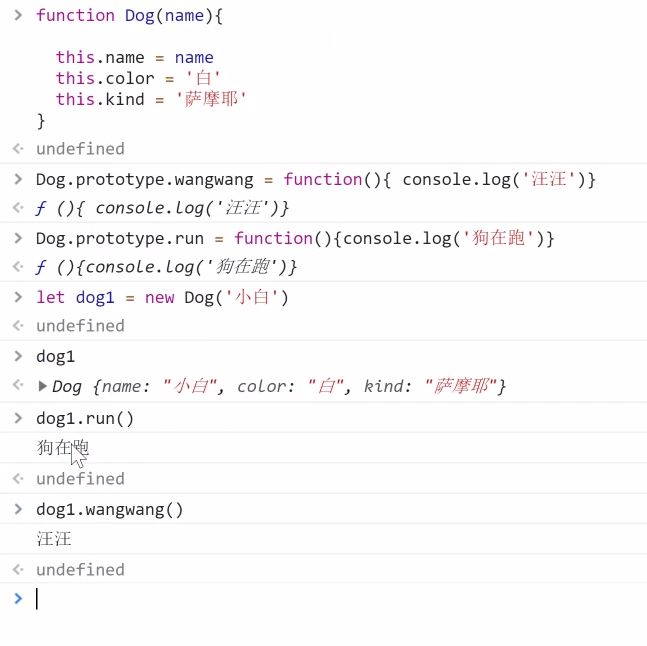
总结
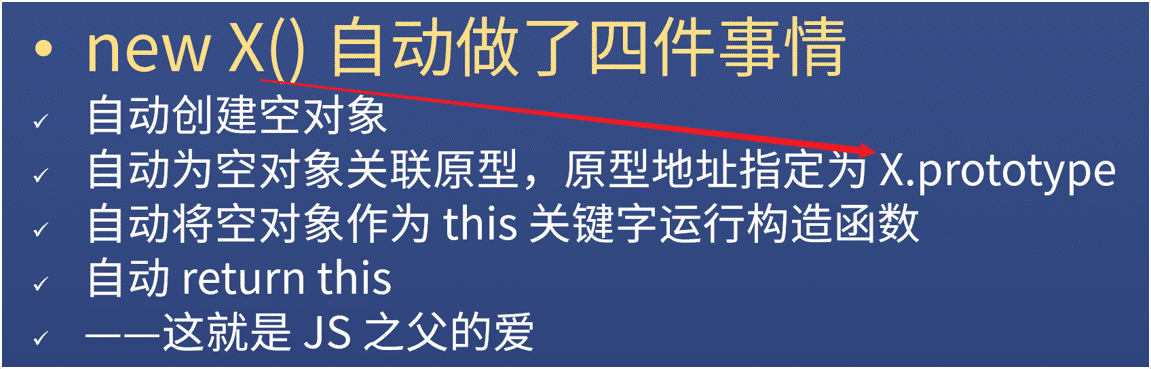
- new X() 自动做了四件事情
- 自动创建空对象
- 自动为空对象关联原型,原型地址指定为
X .prototype
- 自动将空对象作为 this 关键字运行构造函数
- 自动
return this
——这就是 JS 之父的爱
构造函数 X
- X 函数本身负责给对象本身添加属性
X.prototype 对象负责保存对象的共用属性
题外话:代码规范
- 大小写
- 所有构造函数(专门用于创建对象的函数)首字母大写
- 所有被构造出来的对象,首字母小写
- 词性
- new 后面的函数,使用名词形式
- 如
new Person()、new Object()
- 其他函数,一般使用动词开头
- 如
createSquare(5)、createElement('div')
- 其他规则以后再说
总结一个重要的公式
如何确定一个对象的原型
为什么
- let obj = new Object() 的原型是 Object.prototype
- let arr = new Array() 的原型是 Array.prototype
- let square = new Square() 的原型是 Square.prototype
- let fn = new Function() 的原型是 Function.prototype
因为 new 操作故意这么做的
结论
你是谁构造的
你的原型就是谁的 prototype 属性 对应的对象
原型公式
对象.proto === 其构造函数.prototype
参考资料
几道题
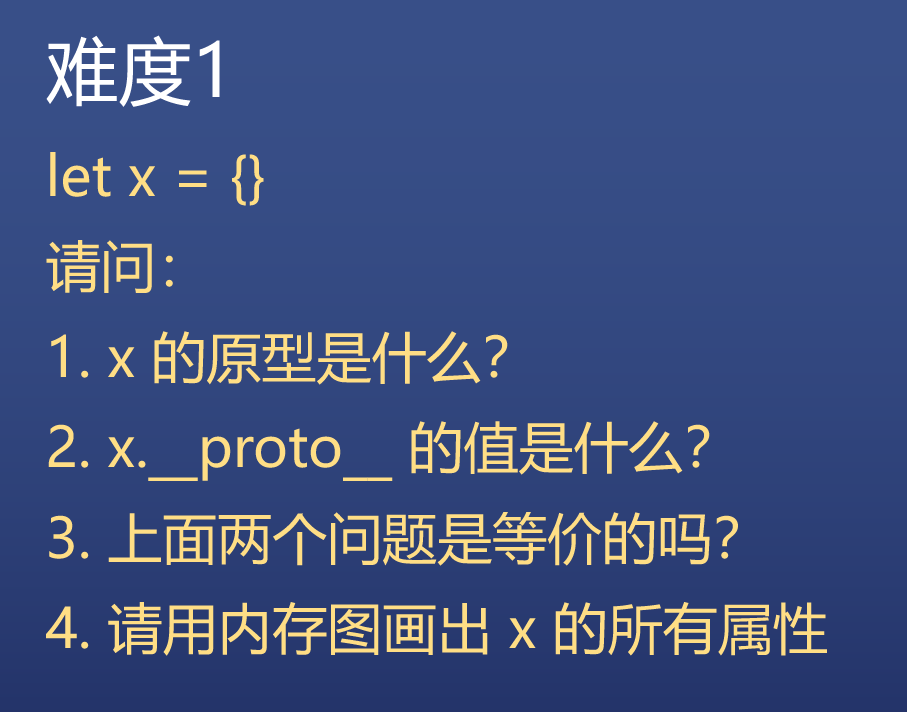
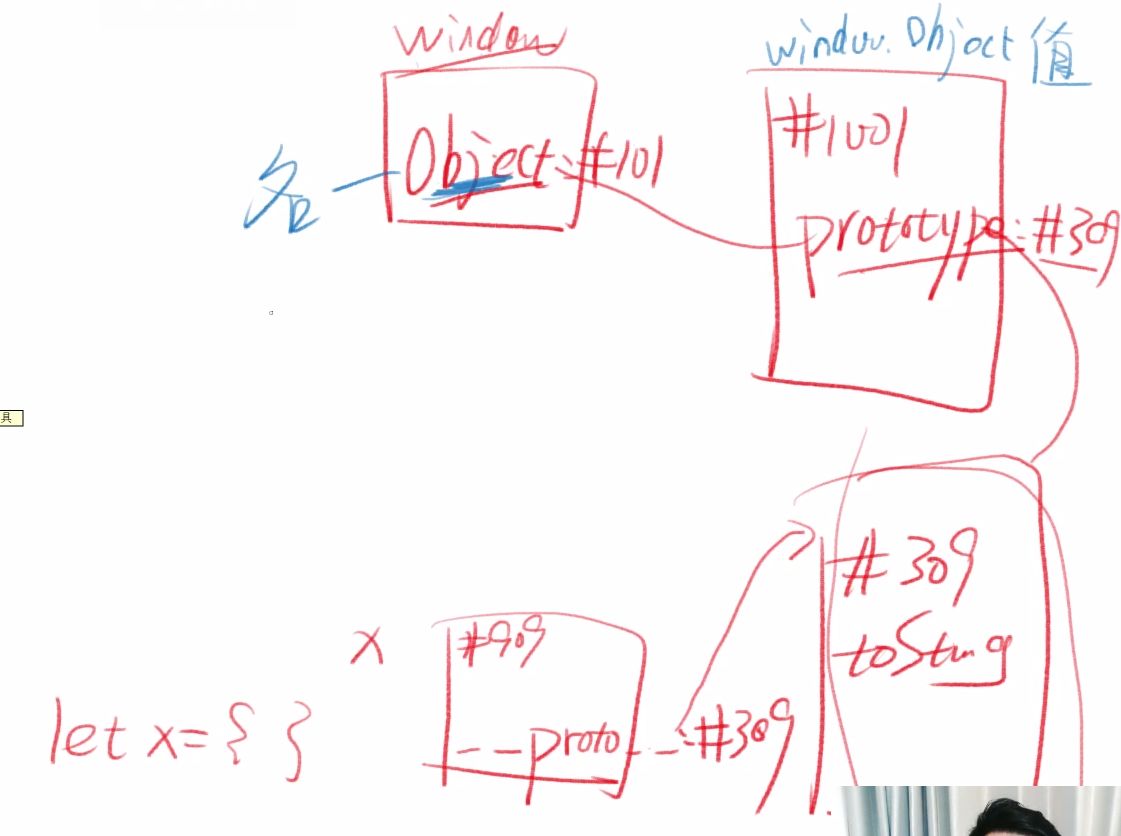
- 套公式
- 原型是什么的意思就是
__proto__ 是什么,然后套公式
- 跟第一题等价
- 对的
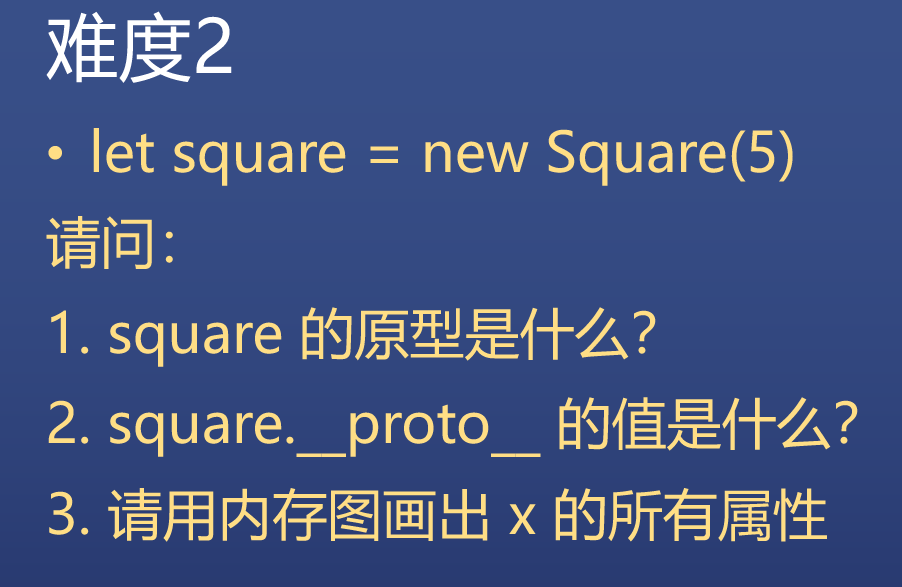
- 跟第二题等价
- Square.prototype
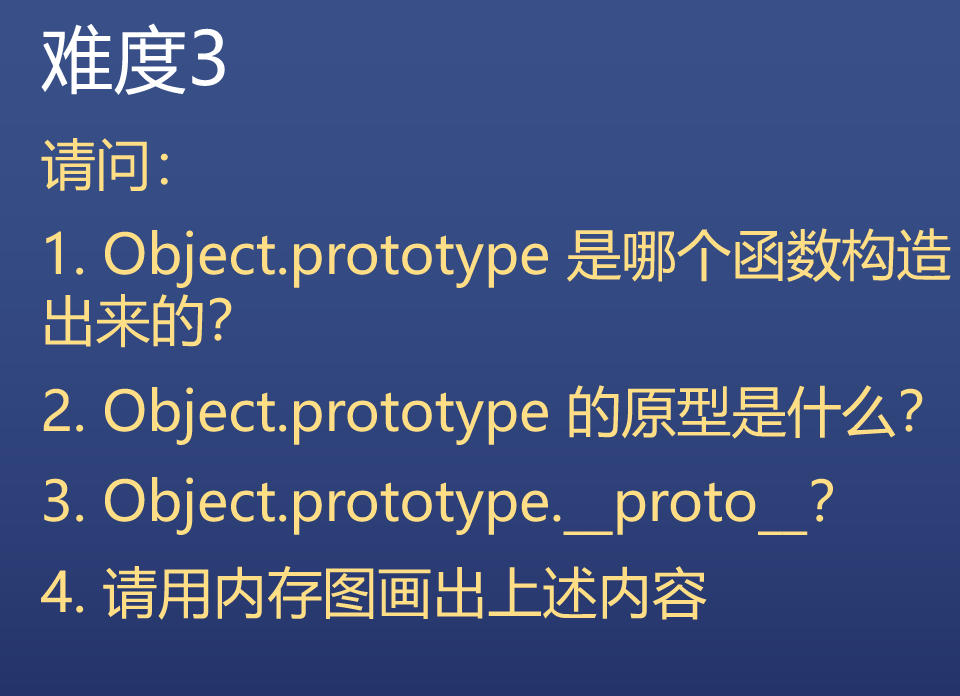
- 不知道
- 没有原型
- null
Square 最终版(存疑)
代码
1
2
3
4
5
6
7
8
9
10
11
12
13
| function Square(width){
this.width = width
}
Square.prototype.getArea = function(){
return this.width * this.width
}
Square.prototype.getLength = function(){
return this.width * 4
}
let square = new Square(5)
square.width
square.getArea()
square.getLength()
|
正方形搞定了,写个圆?
Circle
1
2
3
4
5
6
7
8
9
10
11
12
13
14
15
| function Circle(radius){
this.radius = radius
}
Circle.prototype.getArea = function(){
return Math.pow(this.radius,2) * Math.PI
}
Circle.prototype.getLength = function(){
return this.radius * 2 * Math.PI
}
let circle = new Circle(5)
circle.radius
circle.getArea()
circle.getLength()
|
长方形
Rectangle
1
2
3
4
5
6
7
8
9
10
11
12
13
14
15
| function Rect(width, height){
this.width = width
this.height = height
}
Rect.prototype.getArea = function(){
return this.width * this.height
}
Rect.prototype.getLength = function(){
return (this.width + this.height) * 2
}
let rect = new Rect(4,5)
rect.width
rect.height
rect.getArea()
rect.getLength()
|
对象需要分类吗
回到最开始的问题
- 理由一
有很多对象拥有一样的属性和行为
需要把它们分为同一类 如 square1 和 square2
这样创建类似对象的时候就很方便
- 理由二
但是还有很多对象拥有其他的属性和行为
所以就需要不同的分类 比如 Square / Circle / Rect 就是不同的分类
Array / Function 也是不同的分类, 而 Object 创建出来的对象,是最没有特点的对象
类型 V.S. 类
类型
- 类型是 JS 数据的分类,有 7 种
- 四基两空一对象
类
- 类是针对于对象的分类,有无数种
- 常见的有 Array、Function、Date、RegExp 等
数组对象
1
2
3
| let arr = [1,2,3]
let arr = new Array(1,2,3)
let arr = new Array(3)
|
1
| '0' / '1' / '2' / 'length'
|
- 注意,属性名没有数字,只有字符串
- 数组对象的共用属性
1
| 'push' / 'pop' / 'shift' / 'unshift' / 'join'
|
其实就是英语小课堂啦,用法都在 MDN
后面会有单独课程教这些 API
函数对象
1
2
3
4
| function fn(x,y){return x+y}
let fn2 = function fn(x,y){return x+y}
let fn = (x,y) => x+y
let fn = new Function('x','y', 'return x+y')
|
1
| 'call' / 'apply' / 'bind'
|
后面会有单独课程介绍函数
JS 终极一问
- window 是谁构造的
- Window
- 可以通过 constructor 属性看出构造者
window.Object 是谁构造的
window.Function- 因为所有函数都是
window.Function 构造的
window.Function 是谁构造的
window.Function- 因为所有函数都是 window.Function 构造的
- 自己构造的自己?并不是这样,这是「上帝」的安排
- 浏览器构造了 Function,然后指定它的构造者是自己
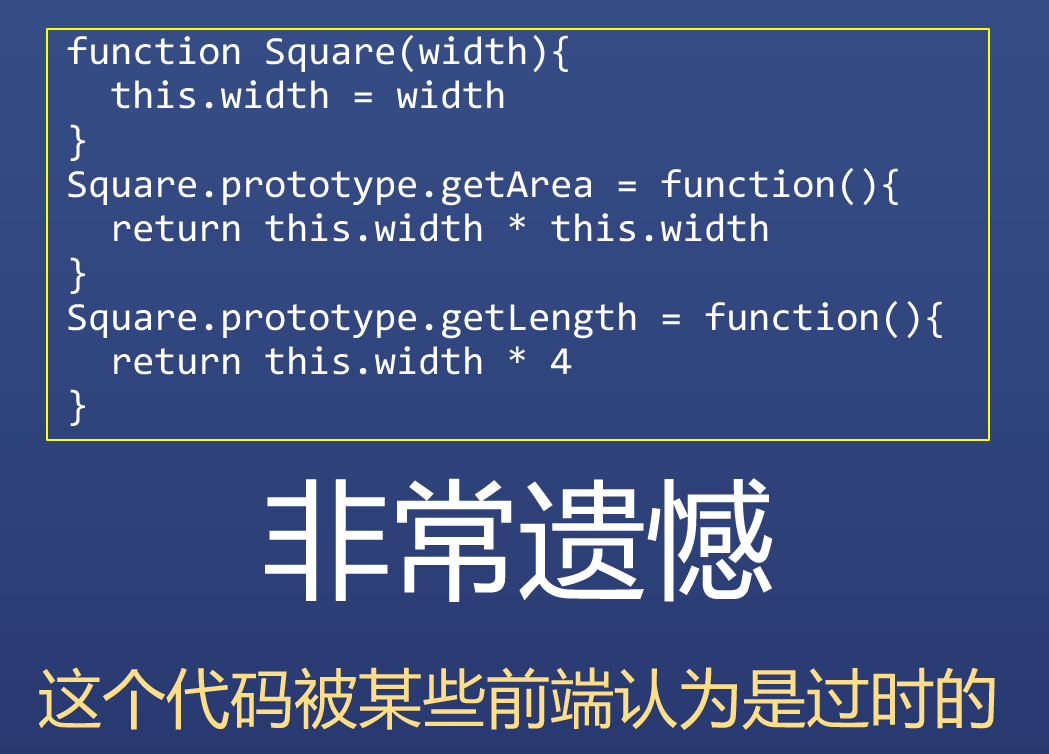
ES 6 引入了新语法
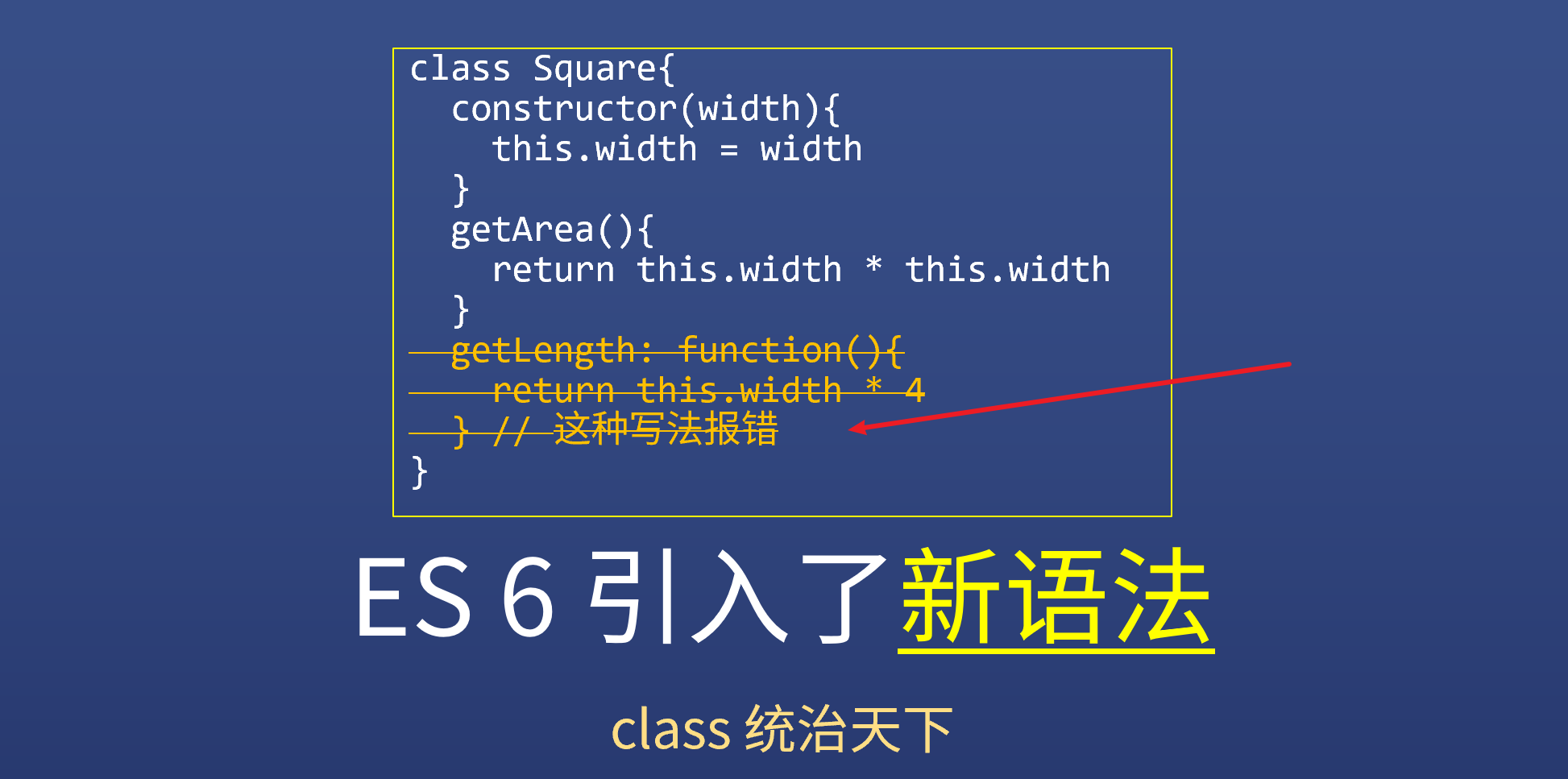
class 语法引入了更多概念
1
2
3
4
5
6
7
8
9
10
11
12
13
14
15
16
| class Square{
static x = 1
width = 0
constructor(width){
this.width = width
}
getArea(){
return this.width * this.width
}
getLength(){
return this.width * 4
}
get area2(){
return this.width * this.width
}
}
|
新手建议
这么多新语法怎么学
- 两种学法
- 花一大块时间把 MDN class 文档全部看完,并记下来
- 看到方方用什么,就学一点,课程学完,就都学会了
- 推荐第二种学法,因为新语法实在太多了
- 在实践中学,记得更牢
- 到底有多少新语法
- 我已经整理了 ES6 的所有新语法,点击查看
- 关于类和对象的新语法有页面1,页面2和页面3
- 所以前端学得越早,越轻松,当年我只用学 ES3
用 class 重写 Circle
1
2
3
4
5
6
7
8
9
10
11
12
13
14
15
| class Circle{
constructor(radius){
this.radius = radius
}
getArea(){
return Math.pow(this.radius,2) * Math.PI
}
getLength(){
return this.radius * 2 * Math.PI
}
}
let circle = new Circle(5)
circle.radius
circle.getArea()
circle.getLength()
|
用 class 重写 Rect
1
2
3
4
5
6
7
8
9
10
11
12
13
14
15
16
17
18
| class Rect{
constructor(width, height){
this.width = width
this.height = height
}
getArea(){
return this.width * this.height
}
getLength(){
return (this.width + this.height) * 2
}
}
let react = new Rect(4,5)
rect.width
rect.height
rect.getArea()
rect.getLength()
|
原型好,还是类好?
class 中两种函数写法的区别
在手机端/APP学习本课
许多同学对 class 语法的细节不太清楚,这里我总结几个容易混淆的语法,这两种写法的意思完全不一样:
语法1:
1
2
3
4
5
6
7
8
9
| class Person{
sayHi(name){}
sayHi: function(name){}
}
function Person(){}
Person.prototype.sayHi = function(name){}
|
语法2:注意冒号变成了等于号
1
2
3
4
5
6
7
| class Person{
sayHi = (name)=>{}
}
function Person(){
this.sayHi = (name)=>{}
}
|
不要强求完全转换成 ES5
大部分 class 语法都可以转为 ES5 语法,但并不是 100% 能转,有些 class 语法你意思理解就行,不需要强行转换为 ES5。
版权声明: 资料来源:饥人谷。任何组织或个人未经许可,禁止转载